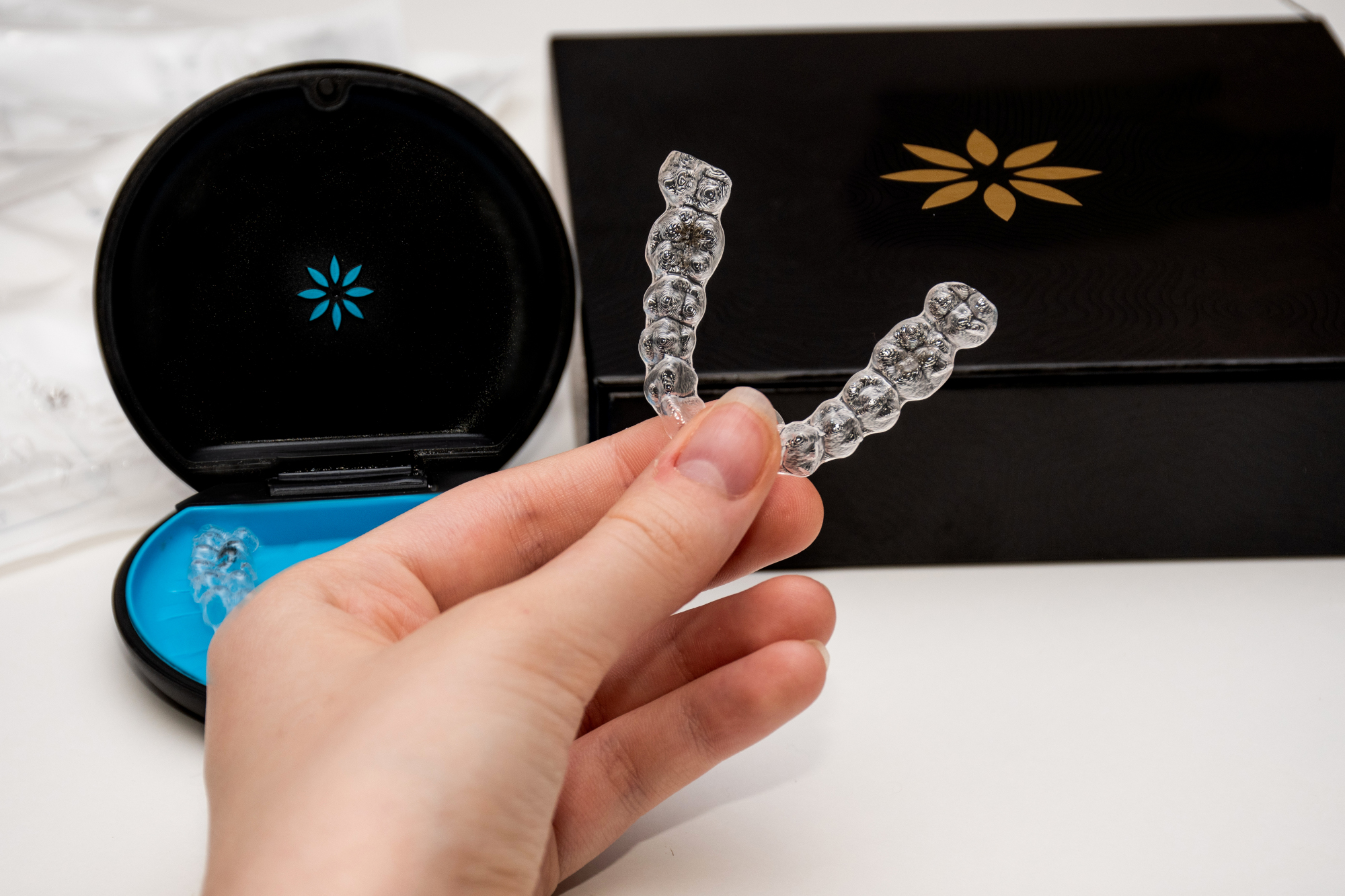
What Is Invisalign? How Clear Aligners Work to Straighten Teeth
Invisalign is the brand name of a type of thin clear aligner used in orthodontic treatment. According to the American Association of Orthodontists, it's designed to make orthodontic treatment "less conspicuous." Made from a flexible thermoplastic material called SmartTrack, these clear coverings fit tightly over your teeth and are much less noticeable than traditional braces.
Key Facts About Invisalign
- • Material: SmartTrack proprietary thermoplastic
- • Visibility: Nearly invisible at conversational distance
- • Wear time: 20-22 hours per day
- • Aligner changes: Every 1-2 weeks
- • Treatment time: 3 months to 2 years depending on case
- • Cost in Thailand: $3,090-$4,000 (30-50% less than USA)
How Does Invisalign Work?
Invisalign treatment is the process of wearing a series of clear, removable aligners that gradually straighten your teeth. No brackets and wires, and none of the restrictions that come with metal braces.
Here's the step-by-step process:
Step 1: Consultation & 3D Scan
Your orthodontist creates a 3D image of your mouth and jaw using an iTero scanner. This digital impression is more comfortable and accurate than traditional putty molds.
Step 2: Custom Treatment Plan
Using ClinCheck software, your orthodontist maps out your entire treatment with a 3D preview. You can see exactly how your teeth will move at each stage and what your final smile will look like.
Step 3: Aligner Fabrication
Your customized aligners are manufactured by Align Technology. Unlike most other clear aligners, Invisalign aligners are trimmed based on each patient's gum line for optimal comfort and aesthetics.
Step 4: Wear & Switch
You wear each aligner for 20-22 hours a day, removing them only for eating and brushing. Every 1-2 weeks, you switch to the next aligner in the series. Each one applies precise, controlled forces to move specific teeth.
Step 5: Retention
After treatment, retainers keep your teeth in their new positions. This is essential—without retention, teeth can shift back.
What Dental Issues Can Invisalign Correct?
According to Healthline and the official Invisalign website, Invisalign can be used for a variety of purposes, including crowding and spacing issues, as well as some mild and moderate bite issues:
Crowded Teeth
When teeth overlap or twist due to lack of space. Invisalign for crowded teeth works by creating space and gradually aligning each tooth.
Gap Teeth (Diastema)
Spaces between teeth, often between the front two teeth. Invisalign can close gaps by moving teeth together over time.
Overbite
When upper front teeth overlap lower teeth excessively. An overbite of 5-25% is considered ideal. Larger overbites (deep bites) can cause teeth to wear down and jaw pain.
Underbite
When lower teeth protrude past upper teeth. Mild to moderate underbites can be treated with Invisalign; severe cases may require surgery.
Crossbite
When some upper teeth sit inside lower teeth when biting down. This can cause uneven wear and gum problems.
Open Bite
When front teeth don't touch when biting down. This can affect speech and make biting into food difficult.
Pros and Cons of Invisalign
Based on research from Healthline and clinical studies, here are the key advantages and disadvantages:
Pros of Invisalign
- Nearly invisible: Much less noticeable than metal brackets and wires
- Removable: Take them out for eating, drinking, and brushing
- Better oral hygiene: A 2017 study suggests this can improve periodontal health by reducing bacteria around teeth and gums
- No food restrictions: Eat whatever you want—just remove aligners first
- Fewer emergencies: No broken brackets or poking wires requiring urgent visits
- Comfortable: Smooth plastic doesn't irritate cheeks and lips
Cons of Invisalign
- Less effective for complex cases: Research suggests Invisalign is more effective for certain types of movement. Severe bite problems may need braces.
- Requires discipline: Must wear aligners 20-22 hours daily. Non-compliance is the #1 reason for treatment failure.
- Removal inconvenience: Must remove before eating or drinking anything except water, then brush teeth before replacing.
- May need attachments: Small tooth-colored bumps that help aligners grip teeth, making them slightly more visible.
- Tooth soreness: Some discomfort when aligners are removed, which can limit food choices temporarily.
How Effective Is Invisalign?
According to Healthline, while research is still limited, available studies suggest Invisalign is effective for mild to moderate cases:
- A 2017 study found Invisalign effective for aligning dental arches but less helpful for severe bite problems
- Research suggests Invisalign is more effective than other types of clear aligners
- Newer versions (since 2010) have enhanced effectiveness by improving force delivery
- A 2022 randomized controlled trial found Invisalign produces the same excellent results as braces for simple cases
The key factors affecting effectiveness are:
- Case complexity: Mild to moderate cases respond best
- Patient compliance: Wearing aligners 22 hours/day is crucial
- Orthodontist experience: An experienced Invisalign provider gets better results
Invisalign vs. Traditional Braces
The main differences between Invisalign and braces:
| Factor | Invisalign | Braces |
|---|---|---|
| Visibility | Nearly invisible | Visible |
| Removable | Yes | No |
| Food restrictions | None | Many |
| Complex cases | Limited | Excellent |
| Compliance needed | High | None |
| Cost in Thailand | $3,090-$5,000 | $1,400-$2,400 |
Getting Invisalign in Phuket
Thailand has become a popular destination for Invisalign treatment due to:
- Significant cost savings: 30-50% less than USA/UK prices
- Same quality aligners: Manufactured by Align Technology worldwide
- Experienced providers: Many Thai orthodontists are Invisalign-certified
- Fewer visits needed: Ideal for dental tourists who can continue treatment at home
- Combine with vacation: Enjoy Phuket's beaches while getting your smile transformed
See our complete guide to Invisalign cost in Thailand for detailed pricing.
Frequently Asked Questions
Is Invisalign painful?
You may feel pressure or mild discomfort for the first few days of each new aligner. This is normal and means your teeth are moving. Most patients find it less painful than braces.
Can I eat with Invisalign?
No, you should remove your aligners before eating or drinking anything except water. This is actually an advantage—no food restrictions! Just brush your teeth before replacing aligners.
How do I clean my aligners?
Rinse them with lukewarm water and brush gently with a soft toothbrush. Avoid hot water (it can warp the plastic) and toothpaste (it can scratch). See our complete cleaning guide.
How long does Invisalign treatment take?
Treatment duration varies by case. Mild issues may take 3-6 months, while complex cases can take up to 2 years. The average is 12-18 months. See our complete timeline guide.
Can adults get Invisalign?
Absolutely! There's no age limit for Invisalign. In fact, adults are the most common Invisalign patients because they appreciate the discreet appearance. See our guide on Invisalign for adults.
Is Invisalign right for me?
Invisalign is ideal if you have mild to moderate alignment issues, value aesthetics, and can commit to wearing aligners 22 hours daily. A consultation with an orthodontist will determine if you're a good candidate.
Is Invisalign Worth It?
Invisalign is a proven, effective orthodontic treatment for most alignment issues. Its clear, removable design makes it popular with adults and teens who want to straighten their teeth discreetly.
The key to success is:
- Wearing aligners 20-22 hours per day
- Changing aligners on schedule
- Following your orthodontist's instructions
- Wearing retainers after treatment
For patients in Phuket or considering dental tourism, Invisalign offers excellent value with significant cost savings compared to Western countries—without compromising on quality.
Ready to Start Your Invisalign Journey?
Find a certified Invisalign provider in Phuket for a free consultation.
Find a Dentist